Christian Plowman
Outpacing wildlife traffickers through regional action
Outpacing wildlife traffickers through regional action
Christian Plowman | April 8, 2026
At the Nepal–India border, traffickers can move a pangolin from a collection hub in Nepal to a consolidation point in India in under an hour. Law enforcement, bound by procedural delays and the need for cross-border permissions, is often left trailing behind.
For an individual pangolin, that gap can be fatal. It is the difference between being intercepted, rehabilitated, and ultimately returned to the wild, or dying en route to an illegal market.
For the species as a whole, the stakes are even higher. Pangolins are the most trafficked wild mammals on Earth, with all eight species listed as vulnerable, endangered, or critically endangered. Every missed opportunity to intervene pushes them closer to extinction.
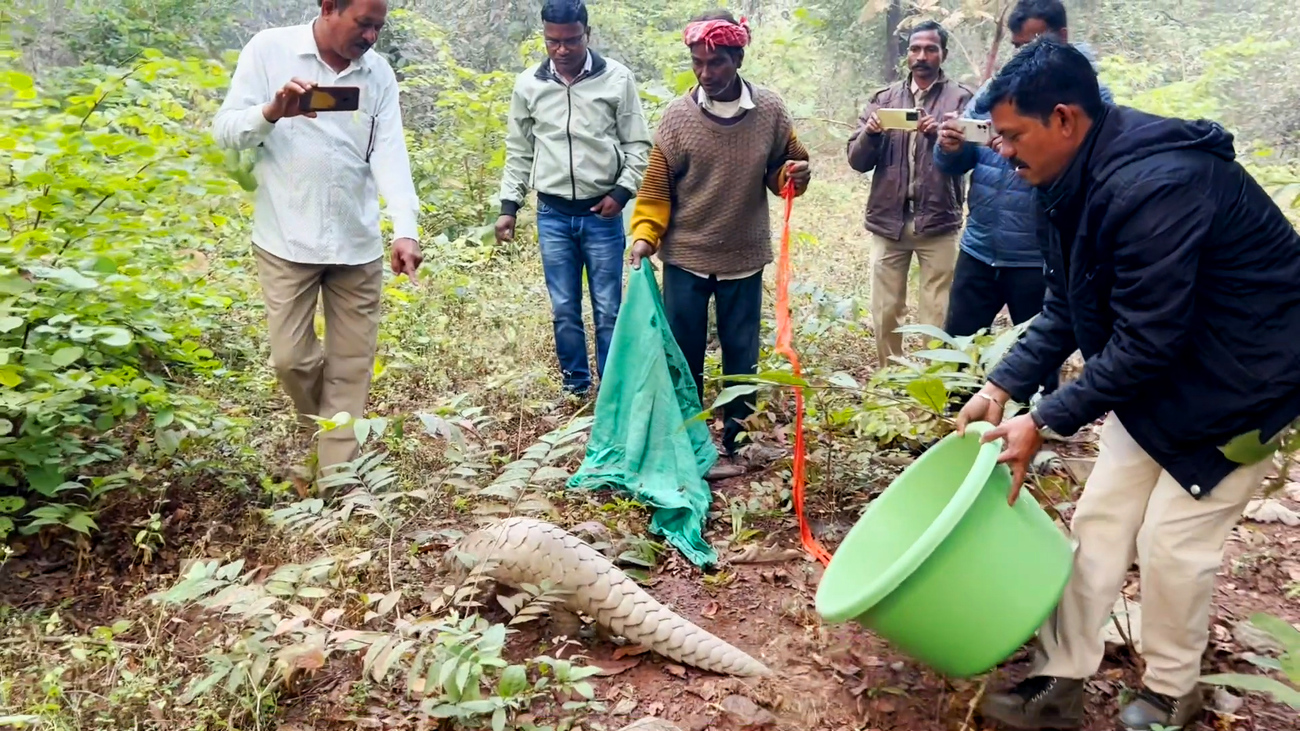
A trafficked pangolin is rescued and released back to the wild in India. Photo: © Chhattisgarh Forest Department
Wildlife trafficking networks operate with speed, coordination, and adaptability across borders. Law enforcement agencies, constrained by national jurisdictions and procedural requirements, are rarely able to respond at the same pace.
This imbalance creates critical gaps. Delays in physical investigations, barriers to real-time intelligence sharing, and weaknesses in legal prosecution frameworks all hinder effective action against trafficking networks across southern Asia. Each gap is an opportunity for traffickers to stay one step ahead.
To address these challenges, delegates from Bhutan, India, Nepal, and Sri Lanka convened in Nepal last month, bringing together environmental management and enforcement agencies from across the region.
Hosted by the Secretariat of the South Asia Wildlife Enforcement Network (SAWEN), in collaboration with the Wildlife Trust of India (WTI) and IFAW, the conference focused on strengthening cross-border cooperation. Discussions centered on tackling wildlife trafficking and cybercrime, as well as establishing shared standards and protocols to ensure animal welfare and human safety during live animal confiscations.
Adapting to outpace trafficking networks
Enforcement officials across the region continue to face operational challenges that hinder investigations and limit intelligence sharing. These barriers underscore the importance of building informal, trusted networks between agencies, enabling faster communication and more effective collaboration across borders.
To keep pace with increasingly sophisticated trafficking networks, enforcement agencies must find ways to work beyond the constraints of complex and often slow formal procedures. Regional meetings like this are a critical first step in building the trust and relationships needed to disrupt trafficking networks more effectively.
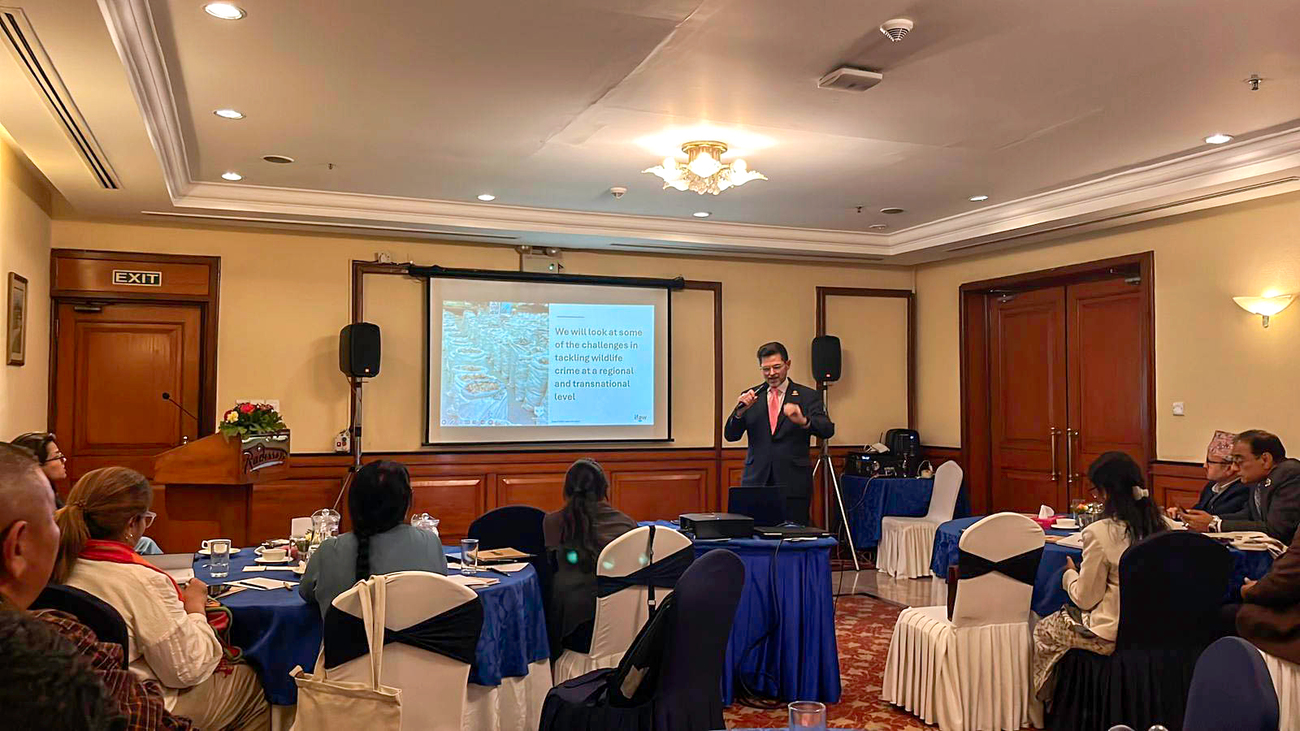
Christian Plowman, Program Manager of Wildlife Cyber Crime at IFAW, presenting at the regional coordination meeting in Nepal hosted by SAWEN, WTI, and IFAW. Photo: Christian Plowman / © IFAW
Following the shift to digital trafficking
Today, modern trafficking networks operate more like corporate entities—complete with scripts, pricing models, and customer service. Open-source trading on Facebook is a thing of the past, with illegal wildlife trade migrating to the “Dark Social” web, i.e., WhatsApp, Telegram, and Signal.
In response, enforcement agencies are exploring how to use open-source intelligence and digital tools to penetrate wildlife trafficking groups. Without these capabilities, they are effectively operating in the dark.
Strengthening response on the ground
Alongside digital transformation, strengthening on-the-ground response remains critical.
Enforcement officials must balance preserving the legal chain of custody for prosecution with ensuring the immediate welfare of confiscated animals. This underscores the urgent need for regional standard operating procedures, alongside continued capacity building for frontline officers.
WTI led a session on strengthening operational frameworks between the SAWEN member countries and focusing on mutual trust-building and intelligence-sharing.
Also in support, IFAW has already delivered training sessions in Nepal and Sri Lanka, equipping enforcement officials with the skills and tools needed to safely handle and care for live animals seized in trafficking operations. Through these efforts, animal welfare remains at the center of frontline responses, improving survival outcomes for rescued wildlife.
Turning collaboration into action
This meeting has already led to tangible next steps, leading to structured, long-term collaboration between SAWEN, WTI, and IFAW that can support these nations in addressing the operational challenges they face.
One immediate outcome is a new informal collaboration with Sri Lankan customs. Authorities will share URLs of illegal wildlife listings that are difficult to remove, and IFAW will leverage its relationships with online platforms, including through the Coalition to End Wildlife Trafficking Online and our role as a Trusted Flagger in the EU, to support their removal. This approach could evolve into a formal mechanism for tackling online wildlife crime across the region.
Another key outcome is IFAW’s commitment to provide in-person operational mentoring that will strengthen WTI’s cybercrime team through hands-on support and the introduction of structured, ethical, and transparent investigative frameworks.
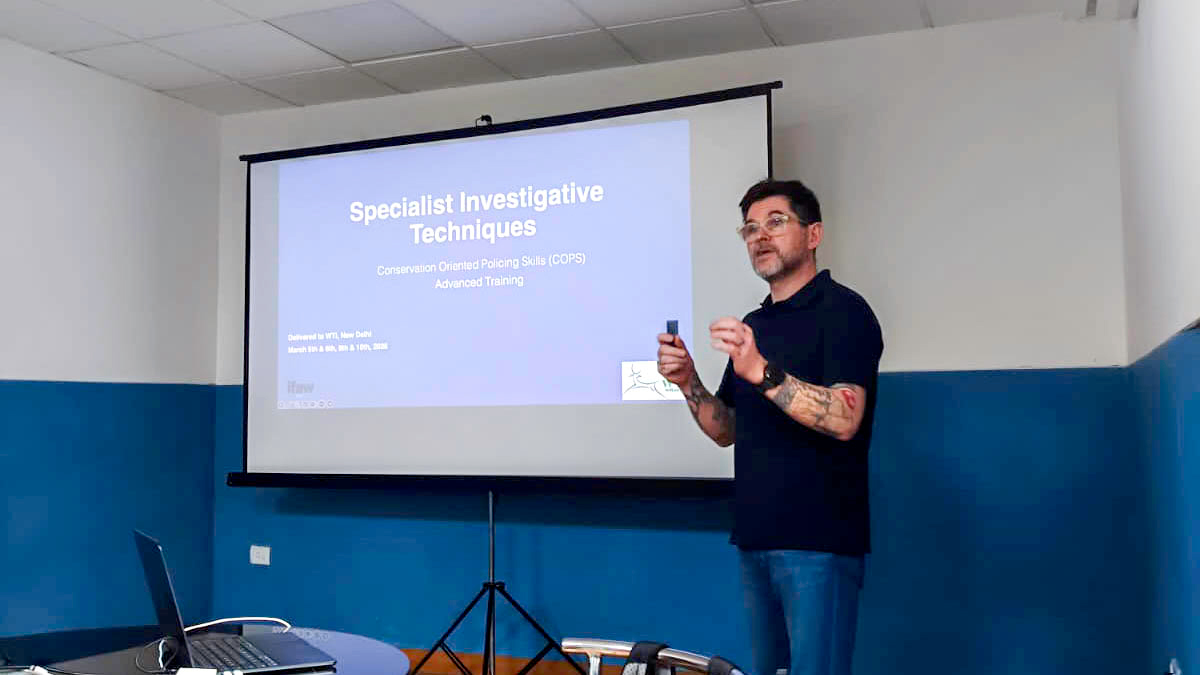
Christian Plowman, Program Manager of Wildlife Cyber Crime at IFAW, presenting at the regional coordination meeting in Nepal hosted by SAWEN, WTI, and IFAW, with delegates from Bhutan, India, Nepal, and Sri Lanka. Photo: Christian Plowman / © IFAW
Looking ahead, IFAW, WTI, and SAWEN will jointly develop a training program that connects cyber investigation techniques with animal rescue and welfare protocols—effectively merging IFAW’s CARE trainings with our cybercrime investigation expertise. Such hybrid trainings could protect and save thousands of animals, such as pangolins and tigers, trafficked through the region annually.
By integrating these approaches, authorities will be better equipped not only to disrupt trafficking networks, but also to ensure that confiscated animals receive immediate, lifesaving care.
A stronger future for wildlife
The impact of regional collaboration like this cannot be overstated. It enables countries like Bhutan, India, Nepal, and Sri Lanka to move beyond high-level policy discussions towards fostering direct, operational relationships between frontline agencies—allowing faster more coordinated action against wildlife trafficking networks.
Ultimately, this collaboration is about more than enforcement. It is about giving animals a second chance—ensuring they are not only rescued from trafficking, but also given the care they need to survive and, where possible, return to the wild.
This program is made possible thanks to the support of the US Department of State Bureau of International Narcotics and Law Enforcement Affairs.
Related content
every problem has a solution, every solution needs support.
The problems we face are urgent, complicated, and resistant to change. Real solutions demand creativity, hard work, and involvement from people like you.