Press releases
Surge in shipping traffic sparks new drive to protect whales from deadly collisions
Read moreIFAW statement on the capture and confinement of Cape Town baboons
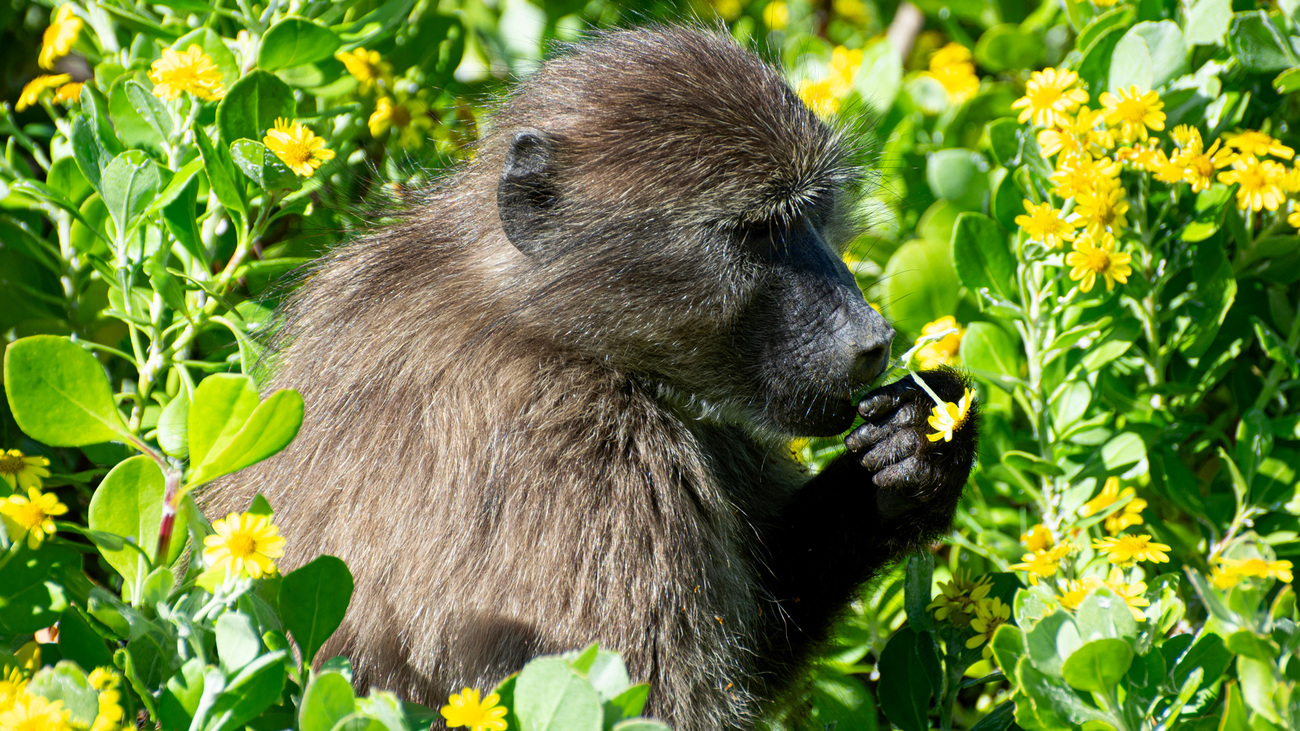
(Cape Town, South Africa, 17 November 2026) – The capture and confinement—for life—of two troops of baboons that have roamed free on Cape Town’s southern Peninsula for generations, is not supported by the International Fund for Animal Welfare (IFAW).
Last weekend 44 baboons making up the “Waterfall” troop were captured by contractors employed by the City of Cape Town and released into a heavily fenced and gated “sanctuary”.
It is intended to vasectomise male baboons and contracept the female baboons, to prevent them breeding—in the long term this will eradicate the group. In captivity Chacma baboons can live to 45 years old.
IFAW recognises that this is a complex issue in which both the welfare of the baboons and public safety need to be considered. The rapid growth of Cape Town’s urban areas, particularly along the lower perimeter of the Cape Peninsula National Park, has led to conflict between residents and the baboons.
In their natural state, the lower areas should be the most the most productive for foraging baboons. However, houses now cover the lowland and poorly managed household garbage and public waste bins, offer richer pickings to hungry baboons who also raid homes.
This is further exacerbated by fragmentation and a closed system where natural dispersal by the baboons is not a viable option.
While there is no definitive solution to the conflict, placing free-range animals in lifelong captivity is neither ethical nor sustainable. Confinement does not equate to coexistence. For coexistence to be realised, it will require a reasonable level of tolerance and acceptance from communities living on the fringes of these natural areas.
IFAW believes free-ranging baboons contribute to the peninsula's biodiversity, which is critical to its ecological sustainability.
The Cape Peninsula Baboon Management Plan outlines mitigation measures that should be adopted. Fencing, bylaws, waste management, and proper land-use planning to prevent encroachment.
Sanctuaries are not the solution; they require intensive management, and resources yet fail to address the root cause of the conflict.
Confining baboons to lives behind an electric fence, is not an option for the baboons or people. IFAW believes it is possible for animals and people to thrive together.
Ends
Media Contact:
Christina Pretorius
Communications Director, Africa
m: +27 82 330 2558
e: cpretorius@ifaw.org
Our work can’t get done without you. Please give what you can to help animals thrive.
Unfortunately, the browser you use is outdated and does not allow you to display the site correctly. Please install any of the modern browsers, for example:
Google Chrome Firefox Safari